Which Secure Disposal Option Is Right for Your Business?
When it comes to secure shredding and compliance, many businesses ask the same question:
Should we choose on-site shredding or plant-based shredding?
The truth is — both options can provide secure disposal when handled by an AAA certified NAID provider. The right choice depends on your workflow, security preferences, compliance requirements, and the volume of materials you need destroyed.
At SecurShred, we help businesses across Vermont, New Hampshire, Northern NY, NW Massachusetts, and Maine choose the secure shredding solution that works best for them.
Let’s break down the differences.
What Is On-Site Shredding?
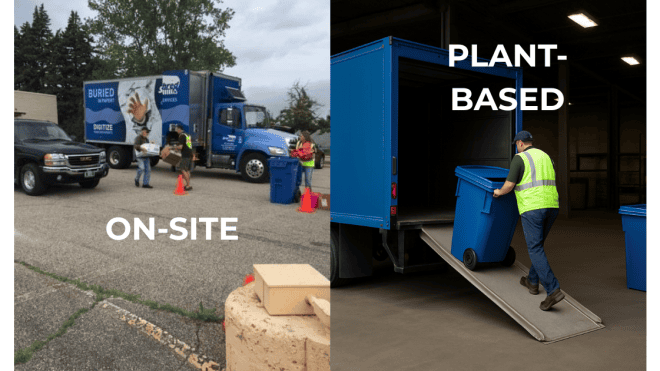
On-site shredding — sometimes called mobile shredding or witness shredding — means your documents or hard drives are destroyed at your location using a secure shredding truck.
This option is popular for businesses that want to:
- Witness the shredding process firsthand
- Minimize chain-of-custody concerns
- Quickly destroy sensitive information
- Meet HIPAA, FACTA, and GLBA compliance requirements
For many healthcare offices, financial institutions, law firms, and municipalities, on-site shredding provides extra peace of mind because the materials never leave the property intact.
What Is Plant-Based Shredding?
Plant-based shredding involves transporting secure materials to a monitored AAA certified NAID destruction facility for processing.
This option is ideal for:
- Large purge projects
- Ongoing document management programs
- Archived storage cleanouts
- Hard drive and solid state drive destruction
- Businesses with high-volume secure disposal needs
At a secure facility like SecurShred’s, materials are processed under strict chain-of-custody procedures with monitored access controls and documented compliance standards.
For many businesses, plant-based shredding is also the most cost-effective solution for large quantities of records and media.
Which Option Is More Secure?
Here’s the good news:
When handled properly by an AAA certified NAID provider, both methods are highly secure.
The key isn’t necessarily where the shredding happens — it’s whether the provider follows proper compliance procedures including:
- Locked collection containers
- Employee background checks
- Chain-of-custody tracking
- Video-monitored destruction
- Verified destruction processes
- HIPAA, FACTA, and GLBA compliance standards
That’s why choosing a certified provider matters far more than simply choosing mobile vs. plant-based shredding.
Don’t Forget About Hard Drives & SSDs
Many businesses focus heavily on paper records but overlook electronic storage devices.
Old hard drives, backup tapes, and solid state drives may still contain:
- Client records
- Payroll information
- Medical data
- Financial records
- Passwords and login credentials
Proper secure disposal of electronic media is a critical part of modern document management and compliance.
SecurShred offers secure destruction for paper documents, hard drives, and solid state drives both on-site and through our secure plant-based facility.
The Bottom Line
Whether you choose on-site shredding or plant-based shredding, your business deserves a secure disposal partner you can trust.
At SecurShred, we help organizations throughout Vermont, New Hampshire, Northern NY, NW Massachusetts, and Maine protect sensitive information while staying compliant with HIPAA, FACTA, and GLBA regulations.
From scanning and storage to secure shredding and destruction, we make document management simple, secure, and compliant.
Visit securshred.com
to see how our AAA certified NAID certified facility helps businesses securely manage and destroy sensitive information with confidence.