Paper Records Storage vs. Office Filing: Which one is right for you?
Every business has records.
Contracts. Employee files. Financial documents. Customer information. Tax records. Medical or legal paperwork. And, depending on how long you’ve been in business, potentially a whole lot of boxes.
At first, keeping those records in filing cabinets or a back room might seem like the easiest solution. But as your business grows, so does the amount of information you need to protect.
So, when does keeping records in the office stop making sense?
Here are seven questions to ask when deciding between in-office filing and professional paper records storage.
1. How Much Valuable Office Space Are Your Records Taking Up?
Take a look around your office.
Are filing cabinets lining the walls? Is a storage room slowly becoming a maze of bankers boxes? Are old records occupying space that could be used for employees, equipment, inventory, or customers?
Office space isn’t free.
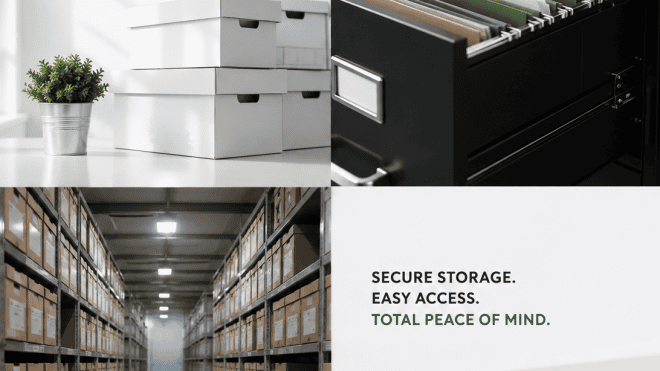
Professional paper records storage allows you to move records you need to retain out of valuable working space while still keeping them organized and available when they’re needed.
For businesses with years—or decades—of records, that can make a big difference.
2. How Secure Are Your Records Right Now?
A locked filing cabinet is certainly better than an unlocked one. But is it enough?
Think about who has access to your office, including employees, vendors, cleaning crews, contractors, visitors, and former employees who may have had access in the past.
Sensitive business records can contain information you don’t want falling into the wrong hands.
Choosing a NAID certified company like SecurShred adds another layer of protection by putting your records into a professionally managed environment designed specifically for secure information handling.
3. Could You Find an Important Record Quickly?
There’s storing information—and then there’s actually being able to find it.
If someone asked you to retrieve a seven-year-old customer record or financial document today, how long would it take?
Five minutes?
An hour?
Would you even know which box to open?
Professional paper records storage isn’t simply about moving boxes somewhere else. It’s about creating an organized system for managing records so they’re accessible when your business needs them.
That can save your staff time and frustration.
4. Do You Know How Long Your Records Need to Be Kept?
Not every business record needs to be kept forever.
In fact, keeping confidential information longer than necessary can create additional storage costs and potential security risks.
Businesses should establish appropriate document retention schedules based on their industry, regulatory requirements, legal obligations, and company policies.
Once records reach the end of their required retention period, they can be securely destroyed rather than continuing to occupy valuable storage space.
Working with an experienced records storage and destruction provider can make that process much easier to manage.
5. What Happens If There’s a Fire, Flood, or Other Emergency?
Here’s a question businesses don’t always consider until something happens:
What would happen to your records if your building were damaged tomorrow?
Water leaks, fires, severe weather, and other unexpected events can destroy years of business information surprisingly quickly.
Professional records storage can help businesses separate important records from their primary workplace rather than keeping everything under one roof.
It’s a simple principle: don’t put all of your information in one basket.
6. What About Your Electronic Records?
Paper isn’t the only information businesses need to manage.
Old computers, servers, hard drives, backup tapes, USB drives, and other electronic storage devices may contain enormous amounts of confidential information.
And clicking “delete” doesn’t necessarily mean that information is gone.
That’s why businesses need a plan for electronic data destruction as well as paper records.
When equipment reaches the end of its useful life, secure destruction and responsible ecycling can help keep sensitive information out of the wrong hands while keeping obsolete electronics out of the waste stream whenever possible.
SecurShred provides secure solutions for both physical records and electronic media, helping businesses manage confidential information throughout its lifecycle.
7. Is Managing Records Really the Best Use of Your Employees’ Time?
Someone has to manage all those boxes.
Someone has to label them.
Someone has to organize them.
Someone has to find documents when they’re requested.
And eventually, someone has to figure out what should be destroyed.
For many medium and large businesses, managing years of stored records internally simply isn’t the best use of employees’ time—or expensive office space.
Professional paper records storage allows your team to focus on running your business while your records are managed securely and professionally.
From Paper Records Storage to eCycling: Protect the Entire Information Lifecycle
Information security doesn’t end when you’re finished using a document or device.
Whether information is sitting inside a filing cabinet, stored on a hard drive, packed into a box, or waiting to be destroyed, your business is still responsible for protecting it.
That’s why SecurShred offers businesses a more complete approach to information management—from secure paper records storage and document destruction to electronic storage destruction and ecycling.
With a NAID certified facility in Vermont, SecurShred serves businesses throughout Vermont, New York, New Hampshire, Maine, and Massachusetts.
Your records may need to stick around for years.
Your filing cabinets don’t have to.
And when those records—or the devices containing them—finally reach the end of their useful life, make sure they’re disposed of securely.